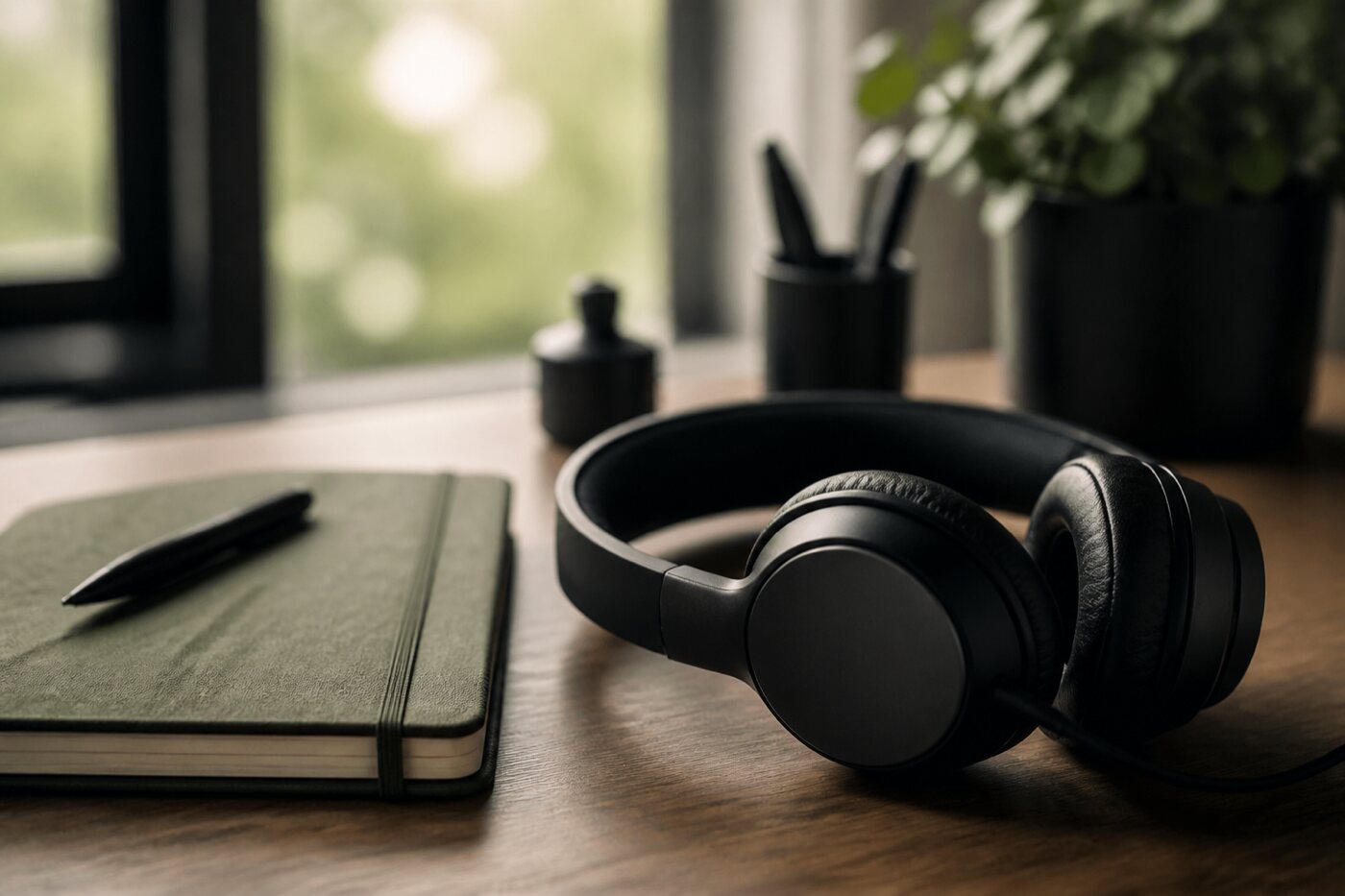
Sound is a tool, not a mood board
Many people press play out of habit. Sometimes that helps. Sometimes lyrics compete with the language task on screen. Focus soundscapes should lower the cost of starting and staying with work—not become a second activity.
Mild Orbit’s rule is simple: classify the task first, then choose silence, noise, instrumental audio, or a short opener track.
Match sound to cognitive load
Heavy language tasks—writing, careful editing, dense reading—usually improve with silence or lyric-free sound. Words in headphones can collide with words on the page.
Repetitive or operational tasks can tolerate steady rhythm. The beat may help maintain pace when the work is procedural.
If you need an emotional on-ramp, use one familiar opener track, then switch to a low-interference bed. Do not browse for new music during the block; discovery is a distraction engine.
Build a boring, trusted playlist
Keep a short playlist of tracks you already know well. Novelty invites skipping. Skipping invites phone picks-ups. The best focus audio is slightly dull.
Headphones can also serve as a social signal: on means focus, off means interruptible. Tell teammates what the signal means so you spend less time renegotiating.
A practical setup
Create three presets: Silence, Soft Noise, and Instrumental. Choose the preset when the deep work block begins. If you notice yourself singing along, searching titles, or skipping repeatedly, hit the kill switch and return to silence.
Volume should stay low enough that the audio remains background. If you are listening as intently as you are working, the tool has inverted.
Office, café, and home differences
In noisy offices, noise-canceling plus soft non-lyric audio can create a usable bubble. In already quiet rooms, silence may be better. Cafés vary; if human speech is intelligible and disruptive, try noise or move seats before adding complex music.
Failure modes
Treating playlist curation as the work. Cap setup at two minutes.
Using lyric-heavy favorites for writing tasks because they are comforting.
Leaving autoplay on discovery mode during focus. Disable it.
Research-minded practical guidance
People vary. Some writers prefer complete silence; others need a steady non-lyric texture to mask hallway noise. Treat personal tests as experiments: one week silence, one week soft noise, compare finished output and subjective distraction.
Do not generalize café habits into home habits. The same brain may need different audio in different rooms.
If you have tinnitus or auditory sensitivity, prioritize comfort and medical guidance over productivity folklore.
Creating presets once
Spend fifteen minutes creating three named presets in your audio app or OS. Then never rebuild them mid-block. Presets remove decision fatigue.
Include a “kill switch” habit: if you touch the playlist to curate, stop audio for the rest of the block. That rule sounds strict and saves hours.
For shared offices, keep volume modest and prefer headphones over speakers.
FAQ
Are nature sounds better than music? Often for language tasks, yes, because they lack lyrical content.
Can podcasts work? Rarely during deep language work. Save podcasts for chores and walks.
What about binaural marketing claims? Be skeptical; judge by your own output metrics.
Experiment log you can copy
Create a three-row log: Date, Preset, Output score (1–5), Distraction notes. Run silence for three deep blocks, soft noise for three, instrumental for three. Compare average output scores.
Most people discover a clear winner for writing and a different winner for repetitive tasks. Codify the winners as defaults and stop rechoosing daily.
If scores are tied, prefer the quieter option. Ties often mean audio is not helping enough to justify the occasional hijack.
Etiquette and shared spaces
In shared homes, announce focus windows so headphone signals are understood. In offices, avoid speakerphone audio masquerading as a focus playlist. In libraries, silence remains the default respectful choice.
If a colleague’s conversation is the distraction, move seats or book a room before escalating volume. Louder audio is a brittle solution.
Parents working from home may need shorter blocks with flexible audio. Prefer presets that start instantly after interruptions rather than elaborate sound design.
Revisit your presets every quarter. Tastes and workplaces change, and an old playlist can become freshly distracting without you noticing.
If you share a focus room, agree on a default of silence unless everyone opts into soft noise. Shared audio should be a group decision, not a solo imposition.
Checklist
- Task classified before sound chosen
- Writing/editing default to silence or no lyrics
- Short familiar playlist only
- No music discovery mid-block
- Kill switch used when audio hijacks attention
- Headphones signal agreed with collaborators
Next step
For your next deep work block, choose silence or a preset before you open the file. If audio becomes the entertainment, turn it off immediately. More focus guides are in the article list.